The Best Glasses for Close Work: Enjoying Hobbies After 50
Reaching your fifties and sixties often provides the time and freedom to dive deeply into the hobbies you love. Whether you are building intricate wooden furniture, threading a needle for a quilting project, or painting fine details on a canvas, these activities require precise visual focus. However, natural age-related changes to your eyesight can quickly turn an enjoyable afternoon into a frustrating struggle. For individuals and families seeking vision care guidance in West Lebanon, NH, and surrounding communities, finding the right optical support is a priority for maintaining an active, fulfilling lifestyle. Identifying the best glasses for close work eliminates the physical discomfort of eye strain and allows you to reclaim the joy and independence of your favorite detailed hobbies.
Understanding How Presbyopia Impacts Fine Motor Tasks
To understand why your hobbies suddenly feel visually demanding, it is helpful to look at the biological changes occurring inside your eyes. The human eye contains a natural crystalline lens that is highly flexible during your younger years. This flexibility allows the muscles inside the eye to rapidly shift your visual focus from objects across the room to fine details right in front of your face.
Around the age of forty, the proteins within this natural lens begin to harden. As the lens loses its physical elasticity, the eye muscles struggle to force it into the shape required for near-vision focus. This normal, expected biological process is known as presbyopia.
When presbyopia begins, the first symptom is usually a subtle blurring of small text or intricate details. You might find yourself naturally extending your arms, holding a piece of fabric or a wooden joint further away from your face to see it clearly. As the lens continues to harden over the next decade, your near-vision focus will decline further. This makes precision tasks like measuring cuts, threading needles, or painting miniature models physically exhausting without the proper corrective lenses.

The Limitations of Generic Magnifiers
When near vision first begins to blur, many adults attempt to solve the problem by purchasing basic over-the-counter reading glasses. While these generic magnifiers offer a temporary fix for reading a restaurant menu or glancing at a text message, they quickly prove inadequate for sustained, focused activities.
Standard magnifying glasses for close work are manufactured with a single, uniform prescription spread across the entire lens. They are designed to provide clear vision at one very specific distance—typically twelve to sixteen inches from your face. If you look up from your sewing machine to grab a pair of scissors sitting two feet away, your vision will instantly blur.
This strict focal limitation forces you to constantly remove and replace your glasses while working. Alternatively, you might find yourself unconsciously leaning forward or hunching your shoulders to bring your project into the narrow zone of clear focus. Over the course of a few hours, this poor posture leads to severe neck pain, upper back tension, and tension headaches. Relying on basic presbyopia reading glasses for highly detailed, multi-distance hobbies ultimately creates more physical disruption than visual relief.
Upgrading Your Eyewear Strategy
Maintaining your physical comfort and the quality of your craftsmanship requires lenses engineered specifically for the demands of your workspace. Standard progressive lenses are a massive improvement over generic readers because they offer distance, intermediate, and near vision in one seamless lens. However, a standard progressive lens is designed for everyday, general-purpose use. The majority of the lens is dedicated to distance vision for driving and walking, while the reading zone is confined to a relatively small area at the bottom.
When you are hunched over a workbench or a crafting table, you do not need distance vision. You need maximum clarity at arm's length and right at your fingertips. This specific environmental need is where advanced optical designs provide a significant advantage.
What Are Task-Specific Lenses?
Task-specific lenses are customized multifocal glasses engineered entirely for near and intermediate distances. By eliminating the distance prescription at the top of the lens, they provide vastly wider viewing zones for computer screens, workbenches, and reading, significantly reducing the need to tilt your head to see clearly.

How Occupational Lenses Adapt to Your Workspace
Task-specific lenses are frequently referred to as occupational lenses. Originally designed to help professionals avoid neck strain while working on dual computer monitors, this exact technology makes them the premier occupational lenses for hobbies.
When you use occupational lenses, the entire upper half of the lens is dedicated to intermediate vision (typically ranging from two to five feet). This allows you to comfortably view your entire workbench, the fabric feeding into the back of your sewing machine, or the sheet music propped up on a stand. The bottom half of the lens smoothly transitions into a wide, powerful near-vision zone, providing the intense magnification required for the finest details of your project.
Because the manufacturer does not have to squeeze a distance prescription into the top of the frame, the "corridor" between the intermediate and near zones is exceptionally wide. You can move your eyes naturally across your project without experiencing the peripheral distortion or "soft focus" that sometimes accompanies standard progressive eyeglasses. This wide field of view is what makes them the ideal glasses for sewing and crafting, allowing you to track a stitch or a cut line without constantly adjusting your head posture.
Measuring Your Personal Focal Distance
The secret to acquiring the best glasses for close work lies in precise physical measurements. A lens cannot perform perfectly unless it is calibrated to the exact distances of your unique hobby environment.
A woodworker operating a lathe stands at a completely different working distance than a jeweler repairing a watch or a quilter sitting at a table. Before purchasing new hobby glasses, use a tape measure to determine two exact distances in your workspace. First, measure the distance from the bridge of your nose to the spot where your hands perform the most intricate work. Second, measure the distance from your nose to the furthest point on your workbench or machine that you need to see clearly.
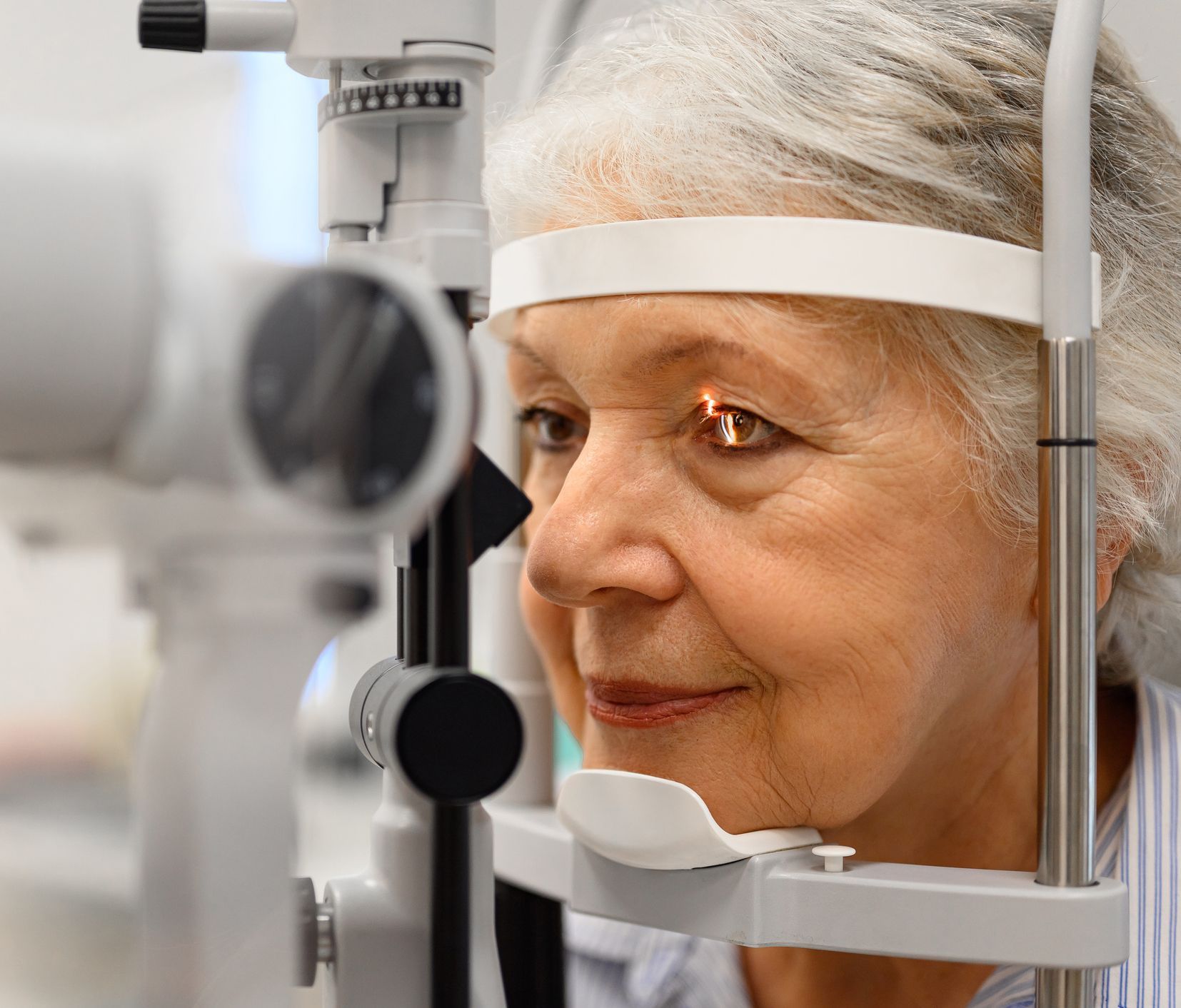
Bringing these specific measurements to your annual eye exams allows your clinician to tailor your prescription precisely to your environment. They will adjust the magnification power to ensure your eyes remain relaxed at those exact distances.
The Role of Lighting and Lens Coatings
In addition to correcting your focal distance, optimizing how light enters your eyes drastically improves your visual endurance. As the crystalline lens inside the eye ages and hardens, it also becomes slightly denser and less transparent. This density scatters incoming light, reducing your overall contrast sensitivity. You will naturally require brighter, more direct lighting to see fine details clearly.
Positioning a dedicated, high-intensity task light directly over your project is highly recommended. However, bright overhead lighting can sometimes create harsh reflections on the surface of your glasses, causing secondary glare that bounces into your eyes.
When ordering dedicated hobby lenses, selecting an anti-reflective (AR) coating is an important step. An AR coating eliminates the mirror-like reflections on the front and back of the lenses, allowing nearly 100% of the available light to pass cleanly through to your eyes. This sharpens the contrast of your project, making it much easier to distinguish between dark threads or fine wood grains. Accessing professional eye care services ensures an optician can guide you toward the right combination of lens design, frame shape, and protective coatings to maximize your visual stamina.

Frequently Asked Questions
What are the best glasses for close work?
The best glasses for close work are task-specific occupational lenses. Unlike standard reading glasses that only focus at one distance, or standard progressives that prioritize distance vision, occupational lenses dedicate the entire lens to intermediate and near vision. This provides a massive, clear field of view specifically for arm's-length and up-close details, preventing neck strain and eye fatigue
Are progressive lenses good for sewing and woodworking?
Standard everyday progressive lenses are excellent for general use, but they can be restrictive for sustained sewing or woodworking. Because standard progressives devote the top half of the lens to distance vision, the near-vision reading zone at the bottom is relatively narrow. For intricate hobbies, a dedicated pair of occupational lenses offers a much wider reading area, allowing you to work longer without constantly moving your head to find the "sweet spot."
Why do my eyes get so tired when I craft?
Eye fatigue during crafting occurs when your eyes are forced to compensate for an incorrect focal distance, poor lighting, or uncorrected presbyopia. If you are using standard reading glasses to look at objects slightly beyond their intended range, the ciliary muscles inside your eyes must work constantly to maintain focus. Prolonged muscle contraction leads directly to aching eyes, blurred vision, and tension headaches.
Do I need a separate prescription for hobby glasses?
Yes, occupational or task-specific lenses require a customized prescription. The eye care professional will take your standard reading prescription and mathematically adjust it based on the exact physical measurements of your workspace. This ensures the intermediate zone is perfectly calibrated to your workbench and the near zone is calibrated to your hands.
Can I just use stronger reading glasses?
Buying stronger over-the-counter reading glasses will magnify fine details, but it will also significantly shorten your focal distance. This means you will have to hold your project even closer to your face to see it clearly, drastically worsening your posture and neck strain. Stronger single-vision readers will also completely blur anything beyond a few inches from your nose, making it impossible to see your tools or workspace.
Conclusion
Refusing to let the natural maturation of your eyes dictate your lifestyle requires adopting smart, highly functional optical strategies. Upgrading from standard, single-vision magnifiers to customized occupational lenses transforms how you interact with your environment. By dedicating the entire surface of the lens to the specific distances of your workbench or crafting table, you eliminate the visual restrictions and ergonomic strain that cause physical fatigue. Identifying the best glasses for close work ensures that you can spend hours engaged in the intricate details of your favorite hobbies, maintaining your visual comfort and the quality of your craftsmanship.
For individuals seeking additional information about this topic or professional vision care in West Lebanon, NH, Pro Optical provides eye exams, prescription eyewear, and contact lens services. Learn more at https://www.pro-optical.com/.