Why Do Headlights Look Like Starbursts at Night? Causes & Lens Solutions
Noticing starbursts around lights at night is a visual shift that can quickly turn a routine evening commute into a stressful, disorienting experience. For individuals and families seeking vision care guidance in West Lebanon, NH, and surrounding communities, understanding the exact biological and environmental causes behind these visual disturbances is an essential first step in restoring visual comfort. As the human eye matures, its ability to process concentrated light sources against a dark background naturally diminishes, leading to an increase in physical discomfort and visual fatigue.
This functional change frequently results in significant difficulty driving at night. Recognizing the anatomical reasons why light scatters inside the eye empowers you to make informed decisions about your ocular health and eyewear. By addressing these specific physical changes, you can implement practical, medically grounded optical solutions that allow you to navigate the roads safely, confidently, and comfortably after dark.
The Optical Mechanics of the Aging Eye
To understand why headlights suddenly look like glowing starbursts or halos, it is necessary to examine how the internal structures of the eye physically change over the course of decades. When you are in your twenties and thirties, the crystalline lens located inside your eye is perfectly clear and highly flexible. Light passes cleanly through this transparent lens and focuses sharply onto a single point on the retina, the light-sensitive tissue at the back of the eye.
As you enter your forties and beyond, the natural proteins that make up this crystalline lens begin to undergo a biological change. These proteins, called crystallins, slowly start to break down and clump together. As a result, the lens gradually loses its perfect transparency and becomes denser.
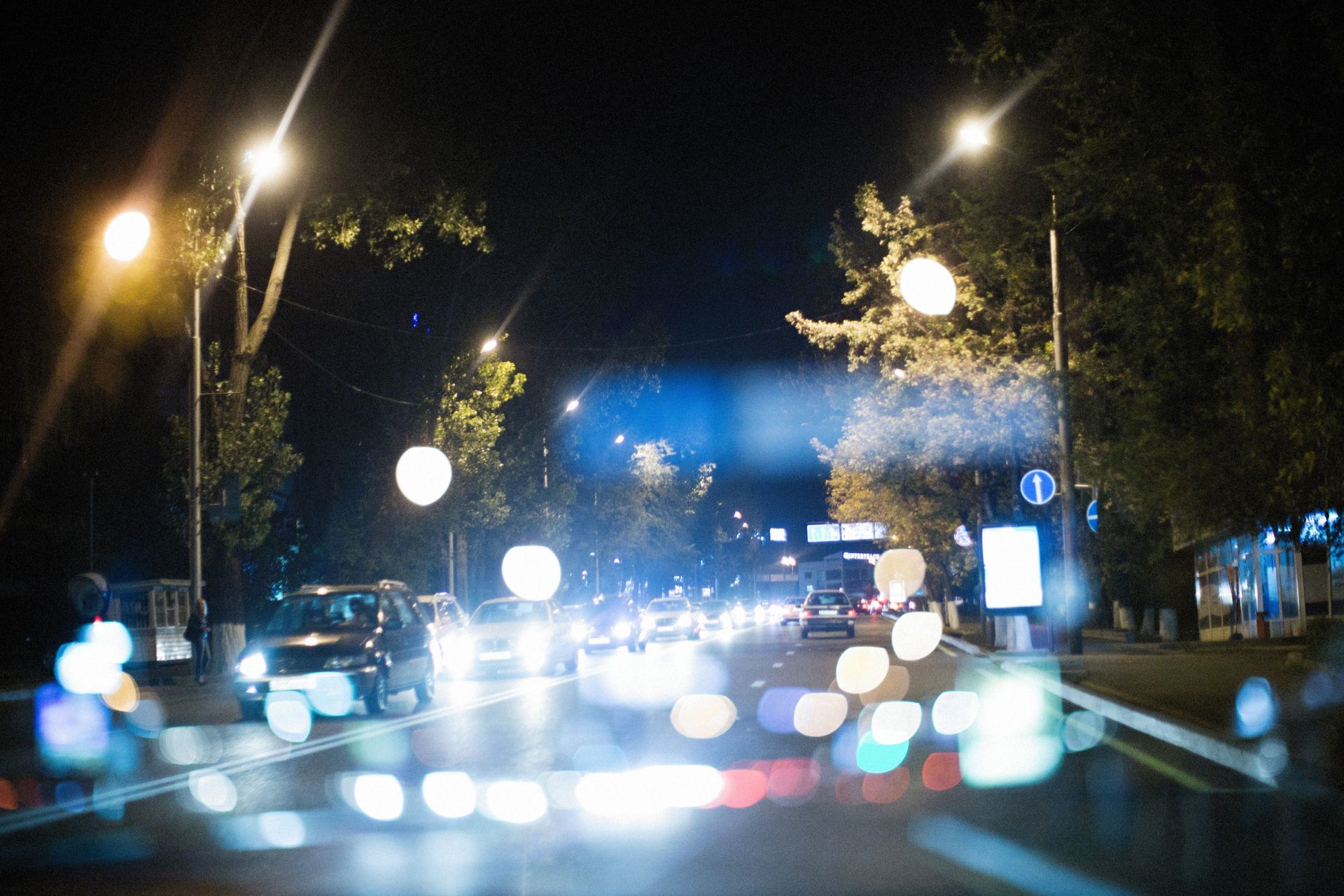
When the intense beam of an oncoming headlight hits this newly dense, slightly cloudy lens, the light waves can no longer pass through in a straight, unobstructed line. Instead, the light waves scatter and refract irregularly inside the fluid of the eye before finally hitting the retina. Your brain interprets this internal light scattering as a starburst, a halo, or a sharp streak of light radiating from the original source.

The Early Stages of Cataract Formation
This gradual clouding and hardening of the internal lens is the fundamental beginning of cataract formation. Cataracts are a normal, expected physiological change that affects the vast majority of older adults.
In their earliest stages, cataracts may not severely impact your ability to read a book or see clearly during a bright, sunny afternoon. During the day, your pupil constricts, directing light strictly through the clearest, central portion of the lens. However, their presence becomes immediately obvious in low-light conditions. At night, your pupil dilates widely to allow more light into the eye. This exposes the incoming light to the cloudy, denser peripheral areas of the lens. The high-contrast environment of a dark road mixed with intense, localized light sources exaggerates the scattering effect. For many adults, an unexplained increase in night driving glare is the very first clinical indicator of a developing cataract.
Astigmatism Night Driving: Managing Structural Irregularities
While internal lens density is a primary factor in light scattering, the surface shape of your eye also plays a critical role in how you perceive contrast and illumination. The cornea is the clear, dome-shaped outer window of the eye. In an eye with perfect refractive anatomy, the cornea is shaped completely evenly, much like the surface of a baseball.
Astigmatism occurs when the cornea is shaped irregularly, resembling the slightly elongated curvature of a football. This uneven curvature prevents incoming light from focusing cleanly on a single point on the retina. Instead, the light focuses on multiple conflicting points, causing varying degrees of blur at all distances.
Astigmatism night driving presents a unique and highly frustrating challenge. Because the pupil naturally dilates in the dark, a larger area of the irregular corneal surface is exposed to incoming light. This maximizes the severity of the refractive error. When the scattered light from a streetlamp or headlight hits an astigmatic cornea, the optical distortion stretches the light source horizontally or vertically. This creates severe starburst patterns, distorts the boundaries of objects, and makes it incredibly difficult to accurately judge the distance and speed of oncoming traffic.
The Role of the Tear Film in Visual Clarity
Beyond the physical structures of the cornea and the internal crystalline lens, the liquid surface of your eye dramatically impacts your overall visual acuity. Every time you blink, your eyelids spread a thin, complex tear film across the surface of the cornea. This tear film is the very first refractive boundary that light encounters when entering the human eye.
The tear film consists of three distinct layers: a mucin layer that adheres to the eye, a watery aqueous layer that provides moisture, and an outer lipid (oil) layer that prevents evaporation. As adults age, the meibomian glands lining the eyelids frequently become sluggish and produce fewer protective lipids. Without a robust lipid layer, the watery aqueous layer evaporates rapidly, leading to chronic dry eye.
When the tear film becomes unstable, patchy, or dry, the surface of the eye loses its smooth optical quality. Looking at a bright headlight through a dry, uneven tear film is optically identical to looking through a severely smeared or pitted windshield. The light fractures immediately upon entry, significantly intensifying the appearance of starbursts and making night driving physically uncomfortable.
Why Modern Automotive Lighting Exacerbates the Problem
It is important to acknowledge that the external driving environment has changed drastically alongside the biological changes occurring within the eye. Automotive lighting technology has evolved at a rapid pace over the last ten to fifteen years. Older halogen headlights emitted a warmer, yellowish light that rested comfortably within the middle of the visible light spectrum.
Today, most new vehicles are equipped with high-intensity discharge (HID) or light-emitting diode (LED) headlights. These modern fixtures emit a very cool, blue-white spectrum of light. While they illuminate the road with greater intensity for the driver using them, this high-energy blue light scatters much more aggressively when it travels through the atmosphere and enters an opposing driver's eyes. When you combine the intense, concentrated beams of LED headlights with the natural density changes of an aging crystalline lens, the resulting starburst effect is magnified significantly.
Optical Solutions: Anti-Reflective Coating for Glasses
Fortunately, advancements in ophthalmic technology offer highly effective, non-invasive solutions for mitigating severe night glare. One of the most important optical upgrades for adult eyewear is the application of a specialized lens treatment.
An anti-reflective coating for glasses is a microscopic, multi-layer chemical treatment applied to the front and back surfaces of a prescription lens. Standard plastic or polycarbonate lenses naturally reflect a significant portion of the light that hits them. This reflection creates a secondary, internal glare within the lens itself, bouncing light directly into your eye and compounding the starburst effect.
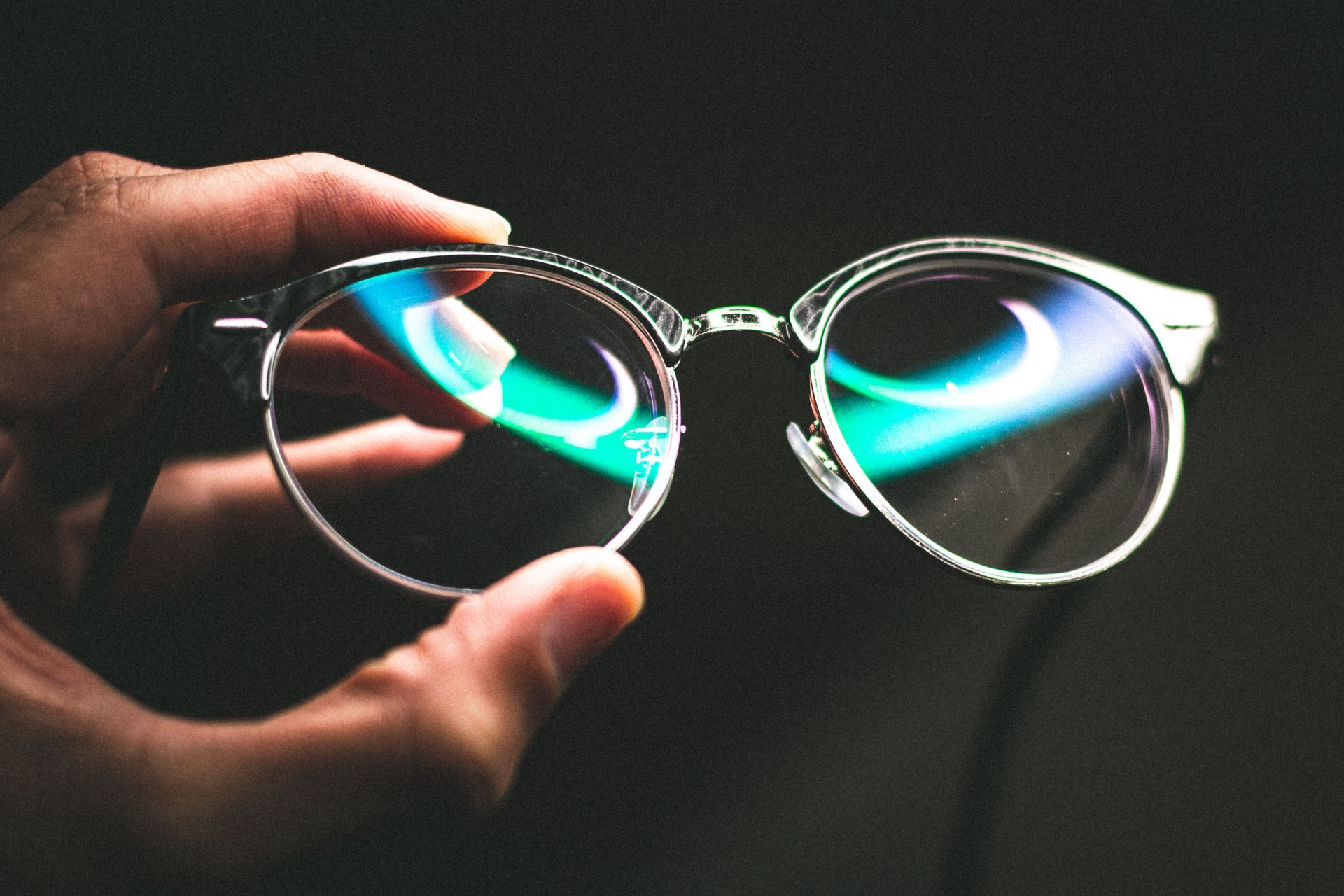
Anti-reflective coatings utilize the principles of optical interference to eliminate these surface reflections. By allowing nearly 100% of the available light to pass cleanly through the lens without bouncing back, this coating directly reduces the blinding glare from oncoming headlights, illuminated street signs, and wet, reflective roads. It sharpens visual contrast, making it significantly easier to see faint lane markers and pedestrians in the dark.
The Importance of Accurate Prescriptions and Diagnostics
Lens coatings are only effective if the underlying refractive prescription is perfectly accurate. Because the physical shape of the eye and the density of the internal lens continue to shift throughout your forties, fifties, and sixties, a prescription that provided perfect clarity three years ago may now be slightly under-correcting your vision.
Even a microscopic, uncorrected refractive error will cause bright lights to bloom and blur at night. Scheduling regular eye exams ensures that your prescription accounts for these subtle, age-related shifts. A clinician can take precise measurements to ensure your astigmatism correction is perfectly aligned, restoring the sharp focal point needed to minimize light scattering.
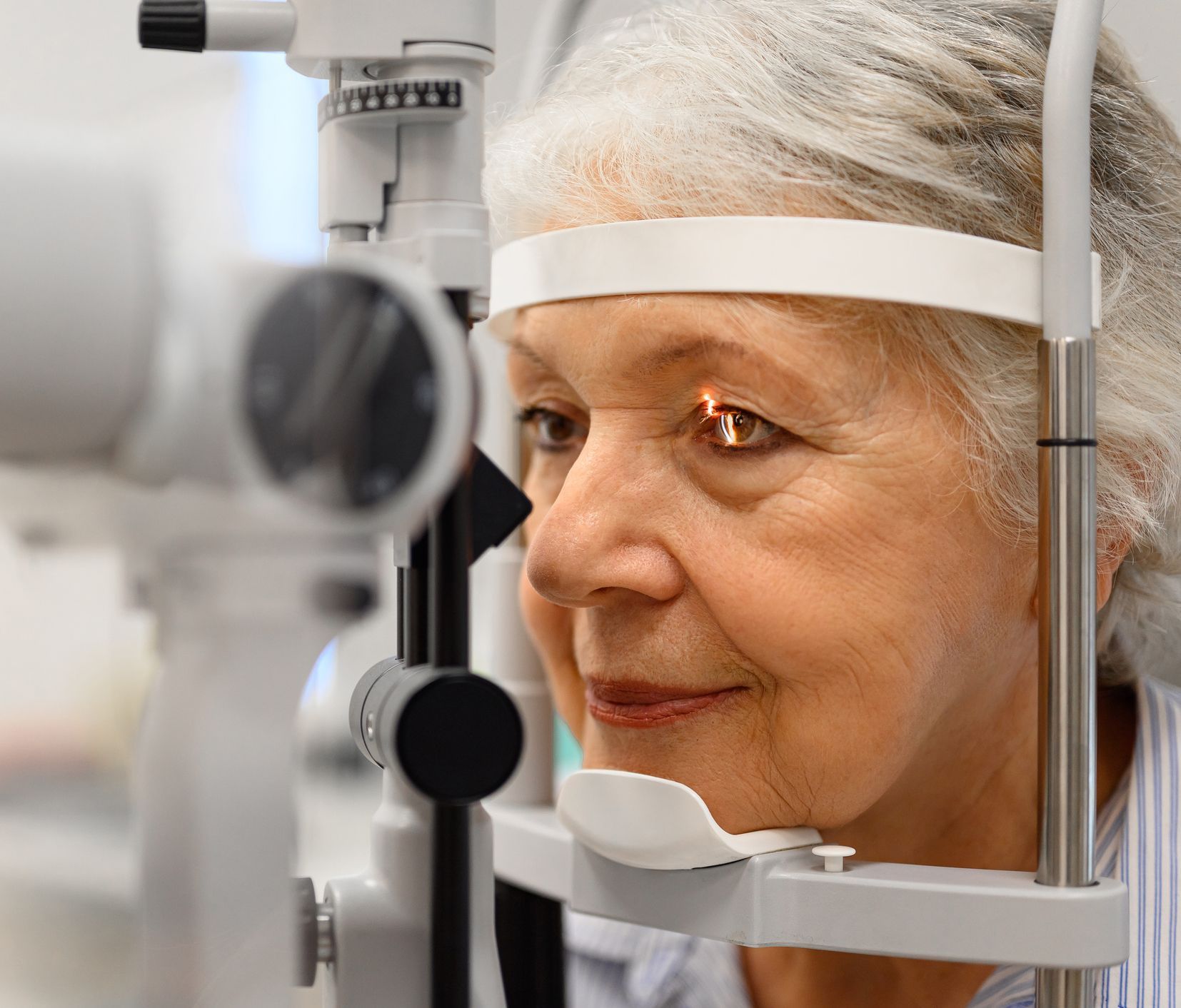
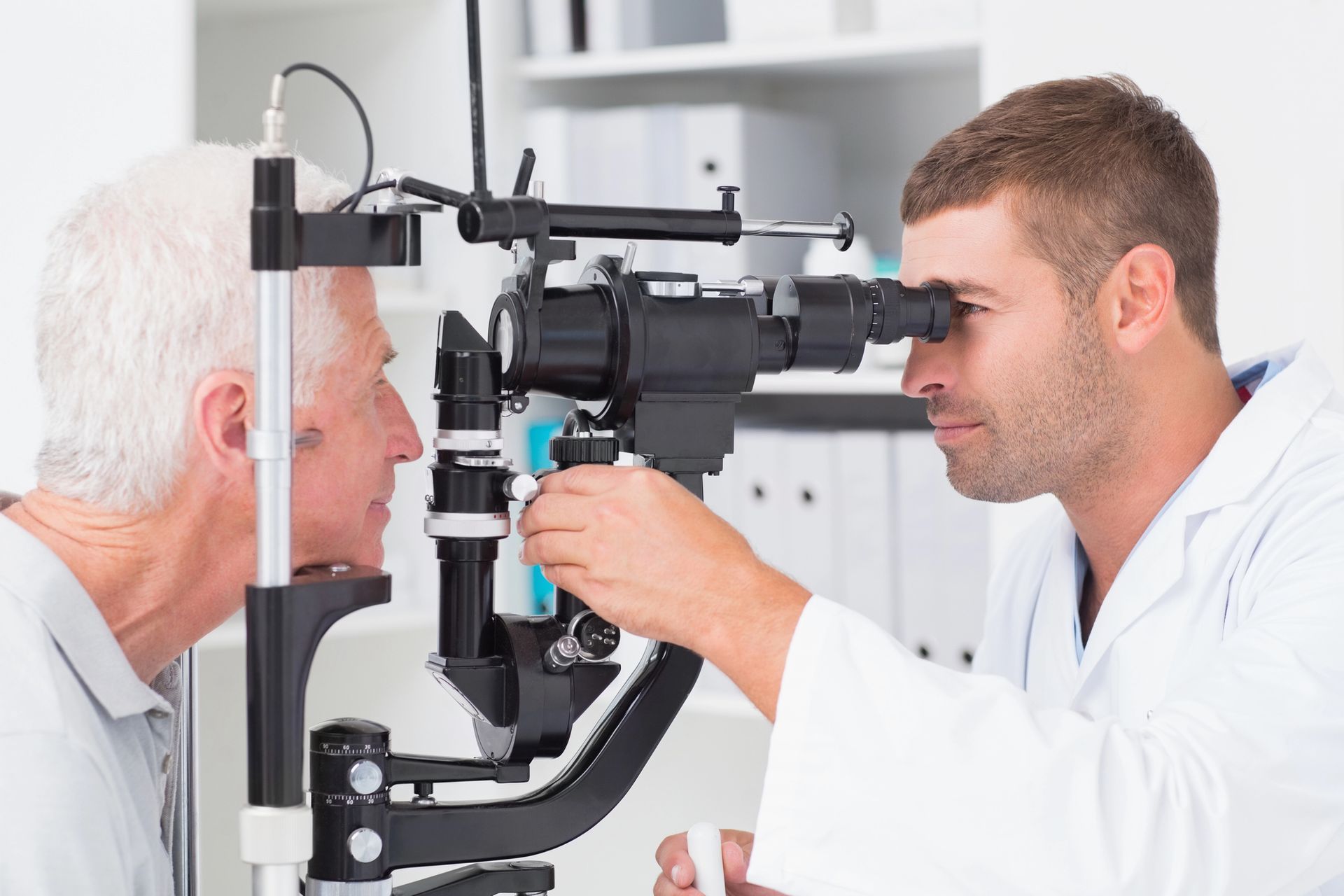
Because starbursts around lights at night can be caused by simple refractive errors, unstable tear films, or developing cataracts, a professional evaluation is the only way to determine the exact structural cause. During an exam, an optometrist can evaluate the transparency of your internal lens, map the exact curvature of your cornea, and assess the microscopic health of your tear film. Accessing comprehensive eye care services ensures that any underlying physical conditions are diagnosed accurately. By taking a proactive approach to your ocular health, you can update your eyeglasses with the correct lens technologies and maintain your safety and independence on the road.
Frequently Asked Questions
Is starburst vision normal as you get older?
Yes, seeing mild starbursts or soft halos around lights at night is a very common biological occurrence as you age. The crystalline lens inside your eye naturally becomes denser and slightly less transparent over time. This physical density causes incoming light to scatter irregularly inside the eye, creating the appearance of a starburst. While mild glare is a normal part of eye maturation, a sudden, rapid, or severe increase in starbursts warrants a professional evaluation to rule out rapidly developing cataracts or corneal swelling.
Can chronic dry eye cause starbursts around lights at night?
Yes, a compromised tear film is a frequent, often overlooked cause of night driving glare. A healthy tear film creates a perfectly smooth, clear optical surface on the very front of the eye. When your eyes are dry, the tear film breaks apart quickly between blinks, leaving uneven, dry patches on the cornea. Light fractures when it hits these uneven patches, intensifying the appearance of starbursts and causing physical eye fatigue.
Do yellow-tinted glasses actually help with night driving glare?
Yellow-tinted glasses, often heavily marketed as specialized night driving solutions, are generally not recommended by eye care professionals. While the yellow tint may slightly reduce the harsh, cool tone of modern LED headlights, it achieves this by decreasing the total amount of light entering your eye. In dark environments, your eyes need as much light as possible to maintain depth perception and see road hazards clearly.
When should I see a doctor about starbursts and halos?
You should schedule an evaluation if the starbursts are severe enough to make you feel unsafe while driving, or if they are accompanied by other visual symptoms. If you experience sudden blurry vision, pain in your eyes, a sudden shower of floaters, or if the halos appear in rainbow colors, you should seek immediate medical attention. These can be symptoms of acute glaucoma or other serious ocular health emergencies.
How long does anti-reflective coating for glasses last?
A high-quality anti-reflective coating is chemically bonded to the lens material and is designed to last for the entire lifespan of your prescription, which is typically one to two years. However, the coating can be scratched or degraded prematurely if you clean your glasses with harsh chemicals, rough paper towels, or abrasive clothing. Using a proper microfiber cloth and a gentle lens cleaning solution ensures the coating remains fully effective at reducing night glare.
Conclusion
Experiencing starbursts around lights at night is a highly common functional challenge as the human eye matures. This phenomenon is driven primarily by biological changes in internal lens density, uncorrected astigmatism, and tear film instability. Recognizing that modern, high-intensity LED headlights naturally exacerbate these physical shifts helps contextualize why night driving feels increasingly difficult. By prioritizing highly accurate prescriptions and utilizing advanced optical technologies like anti-reflective coatings, you can drastically reduce light scattering and internal lens reflections. Maintaining a proactive, informed approach to your visual health ensures you retain the visual clarity and confidence necessary to navigate the roads safely, regardless of the time of day.
For individuals seeking additional information about this topic or professional vision care in West Lebanon, NH, Pro Optical provides eye exams, prescription eyewear, and contact lens services. Learn more at https://www.pro-optical.com/.