Double Vision After 50: How Prism Lenses Can Realign Your Focus
Experiencing sudden visual changes in midlife can be deeply unsettling, but few symptoms cause as much immediate anxiety as seeing two of everything. For individuals and families seeking vision care guidance, prescription eyewear, or contact lenses in West Lebanon, NH, and surrounding communities, understanding sudden visual shifts is the first step toward reclaiming comfort. When double vision develops, even simple daily tasks like reading a letter, walking down stairs, or pouring a cup of coffee can feel disorienting and physically exhausting.
This challenging visual symptom is often rooted in a mechanical coordination issue between your eyes and your brain. Recognizing that highly effective, non-surgical optical solutions exist can help ease the emotional worry that often accompanies this condition. By utilizing specialized lenses, you can realign your visual field, eliminate physical strain, and restore the clear, single vision necessary to navigate your day with confidence.
What is Binocular Vision Dysfunction and Diplopia?
Under normal conditions, your eyes work together as a highly synchronized team. Each eye captures a slightly different image of your surroundings and sends it to the brain. The brain’s visual cortex then seamlessly merges these two perspectives into a single, three-dimensional picture. This unified teamwork is known as binocular vision.
Binocular vision dysfunction occurs when this delicate physical coordination breaks down. If your eyes are even slightly out of alignment, they point at different angles and capture conflicting images. Because the brain cannot merge these mismatched pictures, it is forced to process both simultaneously, resulting in double vision, medically known as diplopia.
Evaluating the primary diplopia causes in older adults is essential because the visual system becomes more sensitive to structural and neurological shifts as we mature. While some forms of double vision are temporary, persistent misalignment requires a professional diagnostic approach to determine the exact muscle or nerve pathways involved.

How Do Prism Glasses Work?
For many adults, the most effective way to resolve binocular misalignment is through a specialized optical design that alters how light enters your eyes. Unlike standard corrective lenses that simply magnify or sharpen your focus, these lenses are engineered to shift the path of light itself.
How Prism Lenses Redirect Light to Correct Diplopia
Prism lenses correct double vision by bending light before it enters the eye, redirecting the visual pathway so that the slightly misaligned images from each eye are brought back together on the retina. This allows the brain to seamlessly fuse them into a single, clear, three-dimensional image without surgery.
In standard glasses, the front and back surfaces of the lens are parallel to one another. A prism lens, however, is manufactured with a progressive wedge shape—it is thicker on one edge (the base) and thinner on the opposite edge (the apex). Because light naturally bends toward the thicker base of a prism, an optician can position the lens to redirect incoming light in the exact direction your misaligned eye is pointing. By shifting the image to meet the eye, rather than forcing the eye muscles to strain and pull the eye into alignment, the lens immediately relieves the physical burden of double vision.
Understanding Sudden Double Vision After 50
Experiencing sudden double vision after 50 is a symptom that should always be evaluated promptly by an eye care professional. While gradual visual changes are common as we age, a sudden onset of diplopia indicates a shift in how the nerves or muscles of the eye are functioning.
There are several physical factors that can lead to adult visual misalignment:
- Eye muscle weakness in seniors: The six extraocular muscles that control the movements of each eye can weaken over time due to natural aging, poor circulation, or systemic conditions. When one muscle loses its physical stamina, it can no longer pull the eye in tandem with its partner.
- Microvascular changes: Small blood vessels that supply the cranial nerves controlling eye movements can become restricted due to high blood pressure, diabetes, or cardiovascular changes, temporarily disrupting nerve signals to the eye muscles.
- Thyroid eye disease: Hormonal changes can sometimes cause inflammation and swelling in the tissues surrounding the eye, restricting natural muscle movement and forcing the eyes out of alignment.
- Neurological shifts: Minor strokes, head trauma, or systemic neurological conditions can alter how the brain coordinates eye movements, leading to coordination breakdowns.
Because sudden visual changes can stem from a variety of underlying health factors, a comprehensive evaluation is the only way to ensure your safety and determine the correct optical path forward.
The Prism Glasses Prescription Process
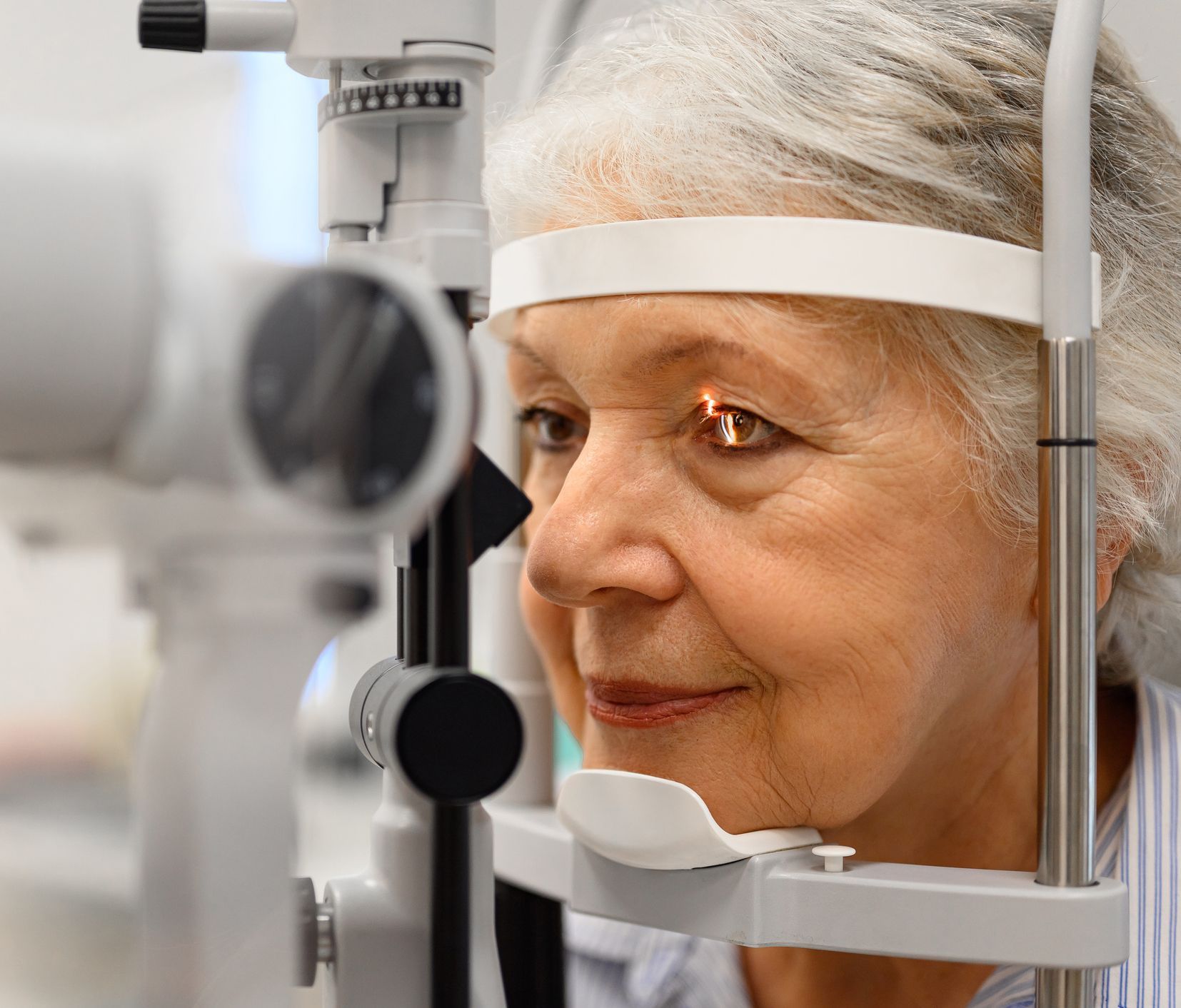
Acquiring a prism glasses prescription requires a highly detailed, specialized evaluation that goes far beyond a standard visual acuity test. Because binocular coordination is highly dynamic, a clinician must measure exactly how your eyes perform when looking in different directions and at various distances.
During your evaluation, the independent doctor of optometry will use a series of hand-held prisms and specialized targets to measure the exact degree of your misalignment, which is calculated in a unit of measurement called prism diopters. They will test your horizontal alignment (whether your eyes turn inward or outward) and your vertical alignment (whether one eye rests higher than the other).
Once the precise prism diopters and base directions (up, down, in, or out) are determined, these measurements are integrated directly into your lens prescription. Modern manufacturing techniques allow these prisms to be ground directly into your customized lenses, meaning your finished glasses will look virtually identical to standard eyewear, with no visible lines or thick, unusual segments to compromise your personal style.

Adjusting to Your New Prism Lenses
When you first begin wearing prism lenses, your visual system must undergo a brief adaptation period. Because your brain has likely spent months struggling to process double images or actively suppressing the signal from one eye to cope with the distortion, it must now learn to relax and accept a unified, three-dimensional visual field.
During the first few days of wear, you may experience mild spatial distortion or a slight feeling of motion as you move your head. This is a normal part of the neuroadaptation process. The most effective way to adapt is to wear your new glasses consistently throughout the day, allowing your brain to establish stable, comfortable visual habits.
If your double vision is accompanied by natural age-related near-vision changes, your prism prescription can be seamlessly integrated into high-quality progressive lenses. This combination ensures you enjoy clear, single vision at all distances—whether you are reading a book, working on a computer, or driving at night.
Alleviating Eye Strain and Physical Fatigue
Attempting to force misaligned eyes to focus on a single target takes a massive physical toll on the body. When your eye muscles work constantly to keep your visual field from splitting, they quickly become exhausted.
This chronic overwork leads directly to severe visual fatigue, tension headaches across the forehead, and a deep, aching pain behind the eyes. Many adults also experience neck and shoulder pain because they unconsciously tilt their head or turn their chin to find a temporary "sweet spot" where their double vision is less severe.
By upgrading to a customized prism prescription, you immediately eliminate this constant muscular struggle. The specialized lenses do the physical work of aligning the light waves for you, allowing your extraocular muscles to rest in their natural, comfortable positions. This directly reduces the frequency of chronic headaches and physical fatigue, allowing you to enjoy your daily activities without discomfort.

The Importance of Professional Diagnostics
Because visual misalignment is a complex physical condition, self-diagnosing or waiting for the symptom to resolve on its own is never recommended. Scheduling routine eye exams is your most reliable tool for maintaining visual comfort.
During an exam, a professional can evaluate the health of your eye muscles, map your binocular coordination, and rule out any serious underlying neurological issues. Accessing comprehensive eye care services guarantees that your eyes are evaluated using advanced diagnostic technology, ensuring your treatment plan is safe and highly accurate. Once your prescription is finalized, an optician will help you select comfortable, lightweight frames that perfectly support your custom prism eyeglasses, restoring your visual clarity and preserving your daily safety.
Frequently Asked Questions
Can you see the prism in your glasses?
For the vast majority of prescriptions, a prism lens looks completely identical to a standard eyeglass lens. Modern optical laboratories use highly precise digital grinding techniques to incorporate the prism directly into the lens material, distributing the thickness evenly so that there are no visible lines, segments, or unusual bubbles.
If your prescription requires a very high amount of prism power, one edge of the lens may be slightly thicker than the other. However, an experienced optician can help you select a frame shape and material that easily conceals this thickness, ensuring your eyewear remains highly attractive and stylish.
Can prism lenses permanently cure double vision?
Prism lenses function as a highly effective, non-invasive corrective tool, rather than a permanent biological cure. They correct the symptoms of diplopia in real-time by bending light to match your eyes' natural resting positions, allowing you to see a single, clear image while wearing your glasses.
If your visual misalignment is caused by a temporary condition, such as temporary muscle fatigue or nerve inflammation, your eye coordination may naturally improve over time. In these cases, the amount of prism in your prescription can be gradually reduced during your annual evaluations as your eye muscles regain their natural strength.
Will prism glasses make me dizzy at first?
It is very common to experience a mild sense of floating, spatial distortion, or light dizziness during the first three to five days of wearing prism lenses. This occurs because your brain is adjusting to receiving a unified, three-dimensional image after spending a long period compensating for misalignment.
To make the transition as smooth as possible, wear your new glasses consistently in safe, familiar environments first. Avoid driving or navigating uneven terrain until the initial adjustment period has passed and your brain has fully adapted to the realigned visual field.
Can I get prism correction in progressive lenses?
Yes, prism correction can be successfully integrated into standard single-vision lenses, bifocals, or modern progressive lenses. This is highly beneficial for adults over fifty who are managing both binocular vision dysfunction and presbyopia, the natural loss of near-vision focus.
Combining these technologies allows you to enjoy clear, single vision at all distances without the need to constantly swap between different pairs of glasses. Your optician will take precise measurements of your eyes' natural alignment to ensure the prism corridor aligns perfectly with your reading and intermediate zones.
How do I know if my double vision is a medical emergency?
If your double vision develops suddenly and is accompanied by other neurological symptoms, you should seek immediate emergency medical evaluation. Critical warning signs include a sudden, severe headache, dizziness, numbness in your face or limbs, difficulty speaking, or a droopy eyelid.
If your double vision occurs only when using one eye (monocular double vision), it is typically caused by a structural issue within the eye itself, such as a severe cataract or dry eye. If the double vision disappears completely when you cover either eye, it is binocular double vision, which should be evaluated by an eye care professional as soon as possible.
Conclusion
Experiencing double vision after fifty can be a disorienting and stressful event, but understanding the physical mechanics of binocular coordination provides a clear path forward. Rather than accepting visual fatigue, constant headaches, or a loss of depth perception as inevitable challenges of aging, pursuing advanced optical solutions can dramatically improve your daily comfort. Utilizing customized prism lenses is a highly effective, non-surgical method for realigning your visual field. By gently redirecting incoming light to match your eyes' natural alignment, these lenses eliminate chronic muscle strain and restore a clear, unified view of your surroundings. Prioritizing routine professional evaluations ensures you receive the precise measurements and customized eyewear necessary to protect your ocular health and maintain your active independence.
For individuals seeking additional information about this topic or professional vision care in West Lebanon, NH, Pro Optical provides eye exams, prescription eyewear, and contact lens services. Learn more at https://www.pro-optical.com/.